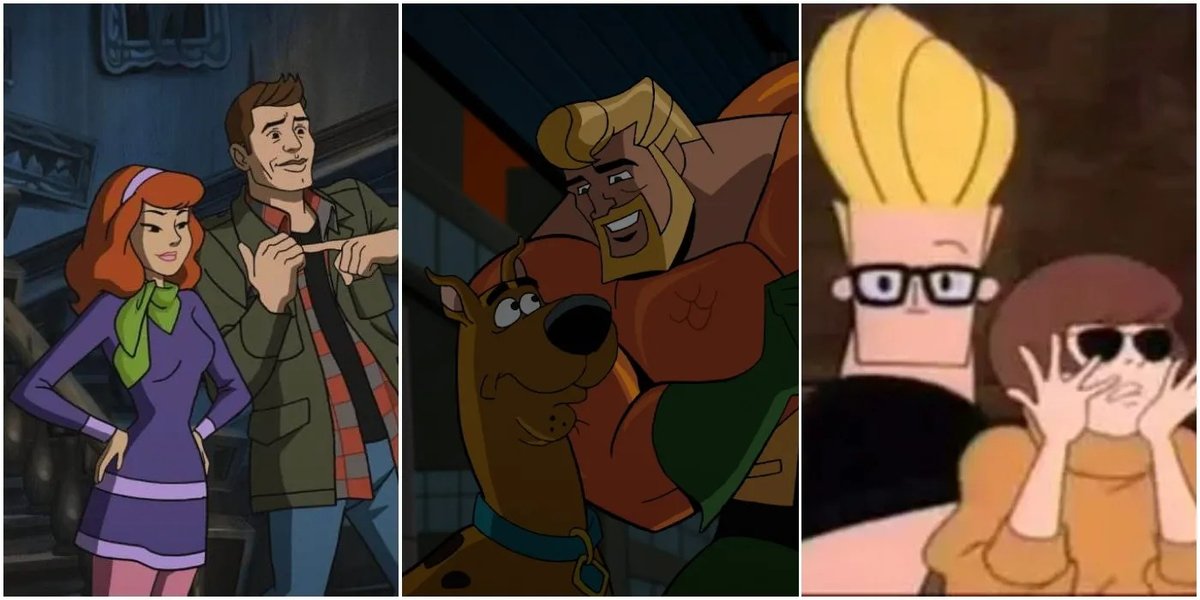
The greatest stories rarely live in isolation. Instead, they often branch out, intertwine, and evolve, drawing us into vast, intricate tapestries of narrative. This is the magic of Fictional Character Crossovers & Shared Universes—a powerful storytelling technique that enriches our experience by connecting disparate tales and beloved characters within a single, coherent reality. From the subtle nod that makes you gasp to the epic saga spanning decades, these connected narratives prove that the whole is often far greater than the sum of its parts.
At a Glance: What Makes a Shared Universe Shine
- Cohesion is King: The best shared universes maintain consistent quality, canon, and tone across all their interconnected stories.
- Planned or Organic: Universes can be meticulously designed from the start or emerge naturally through successful spinoffs and crossovers.
- Beyond the Protagonist: Successful expansions often introduce new leads, allowing the universe to grow beyond its initial focus.
- Quality Over Quantity: More shows or movies don't automatically mean a better universe. Sustained excellence is key.
- Deepens Immersion: Connecting characters and storylines creates a richer, more believable world for audiences to get lost in.
- Avoids Pitfalls: The strongest universes steer clear of declining quality, glaring plot holes, and continuity errors.
Why We're Obsessed with Connected Worlds
There’s a unique thrill in realizing that a seemingly standalone story is part of something bigger. It’s like discovering a hidden passage in a familiar house, leading to new rooms and unexplored territories. Shared universes leverage this human desire for connection and discovery. They offer:
- Expanded Lore: A single story can only cover so much. A shared universe allows creators to delve into diverse corners of a world, explore different eras, and introduce new perspectives without abandoning the core mythology.
- Deeper Character Development: Characters from one story can grow and change by interacting with others, facing new challenges, or even becoming protagonists in their own right.
- Emotional Resonance: Seeing beloved characters return or encountering familiar settings years later can evoke powerful nostalgia and deepen an audience's emotional investment.
- Infinite Storytelling Potential: A well-constructed shared universe is a fertile ground for endless narratives, keeping the audience engaged and eager for what comes next.
But creating a truly successful shared universe is no easy feat. It requires meticulous planning, a deep understanding of continuity, and an unwavering commitment to quality. The trick is to expand without diluting, to connect without confusing, and to introduce new elements without breaking what made the original so special.
The DNA of a Connected Narrative: Crossovers vs. Shared Universes
Before we dive into the shining examples, let's clarify the terminology. While often used interchangeably, there's a subtle but important distinction:
- Crossover: This is when characters from different, usually separate, fictional works meet or interact. Think of it as a temporary collaboration. Batman meeting Scooby-Doo, for example. It might happen once, and then they go back to their own worlds.
- Shared Universe (or Fictional Universe): This implies that multiple stories, characters, and events all exist within the same continuous reality. The connections are inherent and ongoing. The Marvel Cinematic Universe is the quintessential example, where Iron Man, Captain America, and Spider-Man don't just "cross over" but co-exist, their stories influencing one another fundamentally.
Our focus here is on the latter – the meticulously crafted shared universes that endure and enrich storytelling.
Building Blocks: How Shared Universes Come to Be
Shared universes don't always begin with an epic blueprint. They often evolve in one of two ways:
- The Grand Design (Planned from the Beginning): Some universes are conceived as sprawling epics from day one. Creators envision multiple characters, storylines, and even entire franchises before the first story is even told. The Marvel Cinematic Universe, with its phase-by-phase rollout, is perhaps the most famous example of this approach, meticulously planning out crossovers and character arcs years in advance.
- The Organic Bloom (Flowing from Success): More often, a single successful show or film sparks the idea for expansion. A popular character might get a spinoff, or a tantalizing reference might hint at a larger world. These universes grow naturally, building on established success and audience demand. The challenge here is to expand meaningfully without retroactively contradicting established canon.
Regardless of their origin, the most compelling shared universes successfully navigate the delicate balance between continuity, character development, and narrative innovation.
Crafting a Flawless Multiverse: Lessons from Television's Best
Television has become a fertile ground for cultivating rich, interconnected narratives. Here, quality and consistency are paramount, as audiences invest years into these worlds. Let's look at some exemplary TV shared universes that have mastered the art, as you prepare to return to the main hub of connected narratives.
The Gold Standard: Breaking Bad & Better Call Saul
When we talk about flawless TV shared universes, Vince Gilligan and Peter Gould's work stands alone. Breaking Bad, an acclaimed drama about a high school chemistry teacher turned meth kingpin, was a phenomenon. Yet, its prequel, Better Call Saul, didn't just capitalize on its predecessor's success; it arguably surpassed it in emotional depth and narrative complexity.
This franchise is the archetype for how to create a coherent masterpiece. Viewers find no plot holes, no inconsistencies – just two interconnected stories that enhance each other's authenticity. Characters like Bob Odenkirk's Jimmy McGill/Saul Goodman and Giancarlo Esposito's Gus Fring become even more compelling as we witness their origins and intertwining fates. Better Call Saul managed to balance the dark humor and poignant drama, deepening the universe without ever feeling like a mere cash grab.
Expanding Beloved Worlds: Buffy the Vampire Slayer & Angel
Joss Whedon's Buffy the Vampire Slayer was a groundbreaking show, celebrated for its innovative premise, sharp wit, and a formidable female hero. When Angel spun off, following Buffy's brooding vampire ex-boyfriend, the potential for a shared universe truly blossomed.
From Buffy season 4 onwards, the viewing order intertwines, creating a cohesive narrative experience. Both shows delivered consistent, high-quality content, weaving together gothic horror, adolescent humor, and intricate romance. Buffy remained legendary, while Angel carved out its own niche with a darker, noir-inflected approach. Their distinct paths demonstrate that a shared universe can thrive by allowing its components to explore different tones and themes while maintaining narrative integrity. These two timeless classics are a testament to the power of a well-executed shared narrative.
Maintaining Tonal Purity: Life on Mars & Ashes to Ashes
Some shared universes achieve brilliance through tightly focused storytelling. The British police drama Life on Mars, with its time-traveling detective Sam Tyler, captivated audiences with its enigmatic premise and meticulous period detail. Its sequel, Ashes to Ashes, continued the narrative seamlessly, centering on the charismatic, maverick detective Gene Hunt (Philip Glenister).
Together, Life on Mars and Ashes to Ashes form what many consider a "flawless" two-show universe. They maintained remarkable tonal consistency, delivering engaging mysteries wrapped in a deeply engrossing overarching mystery. The universe remained focused and high-quality, even when a planned third spinoff (Lazarus) was wisely canceled, preserving the integrity of the existing franchise.
Generational Sagas: Vikings & Vikings: Valhalla
For stories spanning across time, maintaining quality and consistency can be a monumental task. The Vikings franchise, which began on the History channel, masterfully blended historical record, Norse mythology, action, and court politics. Its Netflix sequel, Vikings: Valhalla, picks up a century later, depicting the decline of Viking rule in England with impressive quality.
These shows are connected by a thousand threads – not just through historical context but through thematic consistency and a shared understanding of their world. Telling stories of different characters across several generations, the franchise demonstrates that a shared universe can evolve its focus while retaining its core identity and appeal.
Deeper Thematic Exploration: The Good Wife & The Good Fight
A shared universe can also serve as a powerful vehicle for exploring complex societal themes. The Good Wife was a critically acclaimed legal drama that skillfully combined political intrigue, procedural elements, satire of the American justice system, and compelling personal drama.
Its spinoff, The Good Fight, elevated the franchise's critique of female oppression and further explored the darkly funny side of criminal law. Both series, though having distinctive styles, share a foundational purpose: exposing legal frailties and inconsistencies through their sharp, resilient female protagonists. This commitment to a shared thematic core, coupled with high production values, ensures that the universe feels cohesive and purposeful.
Subtle Connections & Surprising Ties: Unbreakable Kimmy Schmidt and its Links
Not all shared universes need to be grand, sprawling epics. Sometimes, the connections are subtle, serving as delightful Easter eggs for eagle-eyed fans. Unbreakable Kimmy Schmidt, the quirky comedy from Tina Fey, shares a universe with her earlier hit 30 Rock and even Orange Is the New Black.
Fey playfully inserted characters and actors from 30 Rock (like construction worker Mikey Politano or actors Jane Krakowski and Tituss Burgess in new roles) into Kimmy Schmidt. The connection to Orange Is the New Black is revealed when Kimmy's friend Gretchen Chalker is sent to Litchfield Penitentiary and meets Black Cindy. These subtle nods demonstrate how a shared universe can exist through lighthearted connections, expanding the scope of a show without heavy-handed crossovers.
Beyond the Protagonist: The Bosch & Ballard Expansion
A common challenge for long-running series is expanding the universe beyond the central character without losing its essence. The Bosch TV universe, based on Michael Connelly's novels, masterfully navigated this. Following two series charting detective Harry Bosch's exploits, the universe expanded with Ballard.
In Ballard, Bosch takes a backseat, with Maggie Q's title character leading the charge. This shift is crucial; it helps flesh out the shared universe beyond a single character's immediate circle, proving that the world itself, and its intricate network of characters, is compelling enough to support new leads. This success benefits immensely from Connelly's adept plotting, which grounds the expansive narrative in believable crime and character development.
The Animated Epic: DC Animated Universe
The realm of animation has arguably pioneered some of the most intricate and successful shared universes. The DC Animated Universe is a towering achievement, boasting a 14-year winning streak across eight different series. It brought a consistent style, panache, and storytelling maturity to the superhero genre that redefined animated adaptations.
Built on the foundations of iconic shows like Batman: The Animated Series and Superman: The Animated Series, the universe culminated in arguably its best overall show, Justice League Unlimited. Warner Bros. Animation wrapped production in 2006, but its legacy is enduring, with feature films and even a Batman animated series revival mooted. This universe proves the enduring power of a meticulously crafted animated world, capable of sustaining complex narratives and character arcs for over a decade.
The Perils of Expansion: Pitfalls to Sidestep
For every success story, there are countless cautionary tales. Expanding a fictional universe is fraught with challenges. The most common pitfalls include:
- Declining Quality: The biggest killer of any franchise. When spinoffs or sequels don't match the quality of the original, they dilute the overall universe. Audiences will disengage if new content feels lazy or rushed.
- Canon Breaks & Plot Holes: Nothing shatters immersion faster than inconsistencies. Fans are meticulous, and glaring errors in continuity, character motivations, or established lore can severely damage trust in the creators.
- Over-reliance on Fan Service: While nods to the past are appreciated, a universe shouldn't exist solely to cater to nostalgia. New stories must stand on their own merits; otherwise, the universe feels stagnant.
- Forcing Connections: Not every story needs to be connected. Shoehorning characters or events from one property into another for the sake of a "shared universe" often feels artificial and undermines both.
- Lack of Vision: Without a clear overarching vision or a strong creative force guiding the expansion, a shared universe can quickly become a chaotic mess, lacking direction and purpose.
The most successful shared universes understand these dangers and actively work to avoid them, prioritizing narrative integrity and quality above all else.
The Ever-Evolving Canvas of Connected Narratives
Fictional character crossovers and shared universes are more than just a trend; they represent a fundamental evolution in storytelling. They tap into our innate human desire for connection, allowing us to explore vast, dynamic worlds through multiple lenses. As technology advances and media platforms diversify, the potential for these connected narratives only grows.
From the intricate web of a fantasy saga to the nuanced emotional journeys of character-driven dramas, the shared universe provides an unparalleled canvas for creators to paint their most ambitious stories. When done right, they don't just tell a story; they build an entire world that audiences can inhabit, explore, and cherish for years to come.
So, the next time you find yourself captivated by a new series or movie, take a moment to consider its place in the broader narrative landscape. Is it a standalone gem, or is it a thread in a grander tapestry, inviting you to discover the countless connections that make fictional worlds truly come alive? The most rewarding universes are those that invite endless exploration, promising new adventures and deeper understanding with every connection you uncover.