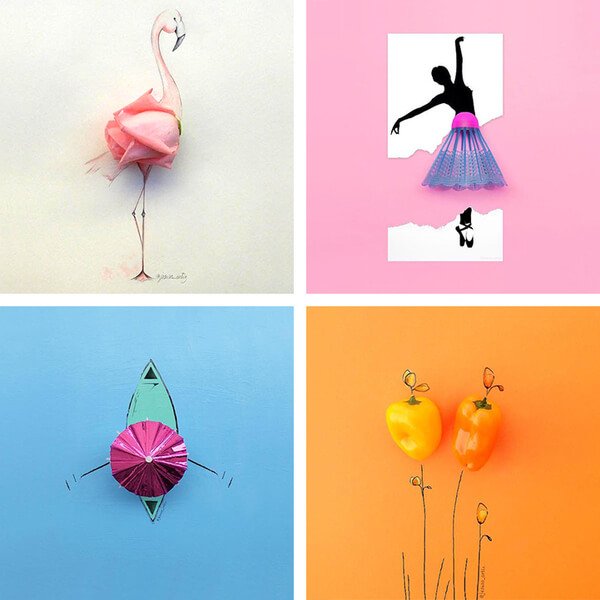
Ever looked at a discarded bottle cap, a forgotten nail, or a plastic straw and wondered if it could be more? Not just trash, not just a tool, but something profound, beautiful, or thought-provoking? This isn't just a fleeting thought; it's the very foundation of an art movement that challenges our perceptions, inviting us to see the extraordinary in the utterly mundane. Welcome to the world where everyday objects shed their utilitarian skins to become canvases, sculptures, and powerful statements.
It's a realm where creativity thrives on redefinition, transforming the familiar into the fantastic. From the earliest avant-garde provocations to breathtaking contemporary installations, artists have continuously pushed the boundaries of what art can be, using the things we overlook daily as their primary medium.
At a Glance: Key Takeaways
- Challenging Perceptions: This art form redefines beauty and creativity by transforming ordinary objects.
- Rich Historical Roots: The concept traces back to early 20th-century movements like Dada and the "readymade."
- Modern Masters: Contemporary artists worldwide continue to innovate with diverse materials and techniques.
- Beyond Aesthetics: This art often carries deep cultural commentary, addressing consumerism, identity, and environmental concerns.
- Accessible Inspiration: It invites everyone to look at their surroundings with fresh eyes and discover hidden artistic potential.
- Sustainable Creativity: Many artists embrace upcycling, turning waste into visually striking and eco-conscious works.
The Spark of the "Readymade": A Revolution in Everyday Objects
Before an old tire could be a masterpiece or a plastic bag a kinetic sculpture, the art world needed a seismic shift. That quake arrived in the early 20th century with the Dada movement, spearheaded by artists who sought to dismantle traditional notions of art and beauty. They introduced a radical idea: the "readymade." This wasn't about skilled craftsmanship in the classical sense, but about an artist's intention and the power of context.
The most famous provocateur of this era was Marcel Duchamp. Imagine the shock in 1913 when he presented "Bicycle Wheel"—a simple bicycle wheel mounted on a stool. It was the first readymade, a defiant gesture asking, "What is art, anyway?" Years later, his "Fountain" (1917), a porcelain urinal signed "R. Mutt" and submitted to an exhibition, became the ultimate symbol of this challenge. It forced people to consider that art wasn't just about what was made, but what was chosen, presented, and interpreted. It democratized the object, elevating it from mere utility to conceptual art.
Beyond Duchamp: Early Explorers of the Ordinary
Duchamp opened Pandora's box, and artists eagerly peered inside. Soon, the mundane became a playground for surrealists and pop artists alike, each finding new ways to imbue everyday items with unexpected meaning.
Consider Meret Oppenheim's iconic "Object (Le Déjeuner en fourrure)" (1936). A teacup, saucer, and spoon, all covered in gazelle fur. This bizarre, sensual, and slightly unsettling combination challenged expectations of touch and taste, twisting familiar comfort into surreal discomfort. It wasn't just a fur-covered cup; it was an exploration of eroticism, absurdity, and the jarring juxtaposition of materials.
Decades later, Claes Oldenburg took the everyday and blew it up to monumental, often soft, proportions. His "Floor Burger" (1964) isn't just a giant hamburger; it's a commentary on American consumerism and pop culture, transforming a fast-food staple into a monumental, squishy sculpture that defies its original form and function. Oldenburg made the familiar feel alien and wondrous, inviting viewers to reconsider the scale and impact of common items.
Then came Jeff Koons, who, in the 1980s, continued to elevate pop culture and kitsch to high art. His "Michael Jackson and Bubbles" (1988) is a porcelain sculpture depicting the pop star and his pet chimpanzee. It takes figures from tabloid headlines and consumer culture, rendering them in a precious, almost sacred material, forcing a conversation about celebrity, adoration, and the boundaries between popular taste and artistic value. These artists proved that anything, absolutely anything, could become art if seen through a different lens.
Contemporary Visionaries: Redefining Everyday Materials
The legacy of the readymade continues to inspire a new generation of artists who push the boundaries even further, using everything from humble plastic cups to discarded circuit boards to create breathtaking installations and sculptures. Their work often reflects global issues, personal narratives, and a deep engagement with material culture.
- Tara Donovan transforms colossal quantities of single-use items like plastic cups, paper plates, and even toothpicks into mesmerizing, organic, large-scale installations. Her work focuses on the cumulative effect of repetition, revealing the inherent beauty and structural possibilities within mass-produced objects. What looks like a naturally occurring phenomenon might actually be thousands of stacked plastic cups.
- Subodh Gupta, an Indian artist, creates monumental sculptures from everyday kitchen utensils like pots, pans, and tiffin carriers. His work often reflects on themes of migration, poverty, and the cultural significance of food in India, elevating the humble tools of domestic life into symbols of national identity and global consumerism.
- Chiharu Shiota weaves intricate, immersive installations using vast quantities of red or black thread, often entangling everyday objects like chairs, dresses, and keys within her web-like structures. Her work explores memory, anxiety, dreams, and the invisible connections between people and things, creating spaces that feel both ethereal and deeply personal.
- Ai Weiwei, the prolific Chinese artist and activist, frequently repurposes artifacts and common objects in politically charged works. Whether it's using ancient pottery as a canvas for a Coca-Cola logo or filling an exhibition space with millions of handmade porcelain sunflower seeds, his art comments on censorship, consumerism, and human rights, giving new voice to silent objects.
- Nils Völker creates kinetic sculptures from disposable items like plastic bags and other everyday packaging. Using fans and microcontrollers, he breathes a mesmerizing, almost lifelike motion into these otherwise static objects, transforming common waste into rhythmic, hypnotic displays that challenge our perception of what is alive and what is discarded.
Signature Styles: Deep Dives into Transformative Artists
Some artists have become synonymous with specific everyday materials, honing unique techniques that reveal profound artistic potential in unexpected places.
Günther Uecker (German): The Power of the Nail
Günther Uecker is renowned for his innovative use of nails, which he hammers into canvases or wooden panels to create dynamic fields of light, shadow, and texture. His technique is not just about attaching an object; it's about meticulously arranging thousands of identical elements to produce an optical effect that shifts with the viewer's perspective and the changing light.
His seminal work, "White Field" (1964), is a powerful example, using thousands of nails to create a visually vibrating surface that feels both aggressive and meditative. Other notable works like "New York Dancer" (1965), "Spirale" (1969), and "Sonnenuhr" (Sun Dial) (1996) demonstrate his consistent exploration of how simple, repetitive acts with a common object can evoke complex sensory experiences and conceptual depth. Uecker's nails are not just fasteners; they are instruments of light and movement.
El Anatsui (Ghanaian): Weaving Histories from Discarded Metal
El Anatsui masterfully transforms discarded materials like liquor bottle caps, metal scraps, and condensed milk cans into monumental, shimmering sculptural "sheets." These works are often referred to as tapestries or textiles due to their flexible, flowing quality, despite being made entirely of metal.
His process involves thousands of bottle caps, flattened, shaped, and then painstakingly woven together with copper wire. The sheer scale and intricate detail of works like "Fresh and Fading Memories" (2007), "Broken Bridge II" (2012-2013), "Gravity and Grace" (2013), and "Tsiatsia – Searching for Connection" (2013) are breathtaking. Anatsui's art speaks to histories of trade, colonialism, consumption, and the environment. Each bottle cap, once part of a global commodity, becomes a pixel in a larger narrative, embodying both individual stories and collective cultural memory.
Francesca Pasquali (Italian): Organic Forms from Plastic
Francesca Pasquali crafts organic, biomorphic sculptures using industrial and synthetic materials, most notably plastic straws and tubes. Her work often plays with repetition, color, and texture to create forms that appear natural and fluid, belying their artificial origins.
Her "Frappa" series uses thousands of plastic straws, meticulously cut and bound together to create vibrant, undulating surfaces that resemble furry, living organisms. Installations like "Spider" use plastic tubes and ties to construct intricate, web-like structures, while "Nidi" (Nests) features coiled plastic materials forming soft, inviting shapes. Pasquali's art highlights the often-overlooked beauty and versatility of synthetic materials, prompting viewers to reconsider their environmental impact while appreciating their aesthetic potential.
The Art of Transformation: Techniques & Materials
The magic of turning an everyday object into art often lies in the technique. It's not just about what you use, but how you use it.
Found Object Assemblage: A Legacy of Combination
Rooted deeply in Dada and Surrealism, found object assemblage is a technique where artists collect and combine discarded or readymade objects into a new, cohesive artwork. It's about bringing disparate elements together to create new narratives, challenge conventions, or evoke unexpected emotions.
- Common Tools: Adhesives (strong glues, epoxy), fasteners (screws, nails, wire), cutting tools (saws, pliers), paint, and various hand tools for shaping and manipulating materials.
- Materials: The possibilities are endless—old toys, machine parts, natural items like driftwood or feathers, broken electronics, household utensils, fabric scraps, photographs, and virtually anything that can be scavenged.
- Key Practitioners: Artists like Joseph Cornell were masters of the "box assemblage," creating miniature worlds within carefully constructed vitrines using found ephemera. Betye Saar transformed racist memorabilia and household items into powerful critiques of American society, imbued with spiritual and feminist themes.
Upcycling and Sustainability: Art with a Conscience
For many contemporary artists, working with everyday objects isn't just an aesthetic choice; it's an ethical one. Upcycling—transforming waste or unwanted products into new materials or products of better quality or for better environmental value—offers immense creative potential while addressing pressing environmental concerns.
- Aurora Robson creates breathtaking, ethereal sculptures from discarded plastic debris, raising awareness about ocean pollution.
- Nick Gentry paints portraits on obsolete technology items like floppy disks, VHS tapes, and CDs, exploring themes of digital memory and obsolescence.
- Veronika Richterová fashions delicate, often whimsical sculptures from recycled PET plastic bottles, transforming rigid waste into fluid, organic forms.
- Michelle Reader constructs dynamic, often life-sized animal sculptures from household waste, illustrating the volume of trash we produce and the potential for its reuse.
These artists demonstrate that environmental consciousness can be profoundly beautiful, transforming what we discard into something valuable and thought-provoking.
Behind the Scenes: Innovative Artworks & Their Making
Understanding the process behind these unique artworks offers a deeper appreciation for the creativity and meticulous effort involved.
David Foster (British): The Art of the Nail Portrait
David Foster creates stunningly realistic portraits by hammering thousands of nails into a wooden board. What makes his work unique is the way he varies the height of each nail to achieve incredible tonal gradations, creating areas of light and shadow that define the features of his subjects.
- His Process:
- Sketching: Begins with a detailed sketch of the portrait on the wooden board.
- Pre-Drilling: Often pre-drills holes to guide the placement and depth of the nails, especially for intricate areas.
- Careful Hammering: Each nail is hammered to a precise depth. The higher the nail, the lighter the tone; the shorter the nail, the darker the tone. This requires immense patience and an eye for subtle shifts.
- Adjustment: He constantly steps back, adjusting nail heights to refine the chiaroscuro effect.
- Finishing: The finished piece is often sealed or framed, allowing the interplay of light and shadow on the nail heads to create the final image.
Examples like his portraits of Albert Einstein and John Lennon showcase the uncanny ability of simple nails to capture the essence of a human face, appearing almost photographic from a distance.
Michael Mapes (American): Deconstructing the Masters
Michael Mapes deconstructs and reconstructs famous Dutch master paintings into intricate object collages, presented in specimen boxes. His unique approach transforms flat canvases into three-dimensional investigations, revealing hidden layers of meaning and material.
- His Materials: Beyond photographic fragments of the original painting, Mapes employs an astonishing array of items: insect pins, gelatin capsules, glass vials, dried botanical specimens, hair samples, fabric swatches, and other tiny curiosities.
- His Method: He meticulously cuts up and reassembles fragments of the original image, then organizes them into small compartments within a display box. Each compartment might contain a specific element of the original painting (a brushstroke, an eye, a texture) paired with a corresponding object or material that relates to it conceptually or visually. The effect is like a forensic study of the painting, a taxonomical breakdown that invites close inspection and reinterpretation.
Mapes doesn't just recreate; he reimagines, offering a new way to experience art history through the lens of everyday detritus and scientific categorization.
Why It Matters: Impact and Resonance of Repurposed Art
The art of transforming everyday objects isn't just a quirky niche; it has profound impacts on both the art world and society at large.
Audience Engagement: A Familiar Entry Point
One of the most powerful aspects of this art form is its ability to create an immediate connection with the audience. When art is made from familiar materials, it lowers the barrier to entry, making it more approachable and less intimidating than traditional art forms. Viewers feel a sense of recognition, sparking curiosity and inviting deeper engagement.
- Interactive Elements: Artists often incorporate elements that encourage interaction. Felix Gonzalez-Torres's famous "candy spills" invite viewers to take a piece of candy, diminishing and replenishing the sculpture over time, engaging with themes of loss and renewal.
- Movable Components: Olafur Eliasson's "The Weather Project" at the Tate Modern, with its artificial sun and mist, created an immersive environment where viewers became part of the artwork itself, changing their perspective with every movement.
- Participatory Installations: Yayoi Kusama's "Obliteration Room" begins as a pristine white space, which visitors are invited to cover with colorful dot stickers, transforming the room into a vibrant, chaotic, and collaborative artwork.
This direct engagement fosters a more personal and memorable art experience, proving that art isn't just something to be passively observed.
Cultural Commentary: Objects as Storytellers
Repurposed everyday items are potent vehicles for social, political, and cultural commentary. By taking objects out of their original context, artists can imbue them with new meanings, challenging societal norms, highlighting consumerism, or addressing complex issues of identity and heritage.
- Brian Jungen transforms iconic Nike Air Jordan sneakers into First Nations-style masks, critiquing corporate globalization, consumer culture, and the appropriation of indigenous art forms. The familiar brand becomes a symbol of broader cultural tensions.
- Meschac Gaba's "Museum of Contemporary African Art" (1997-2002) uses a series of interactive, themed "rooms" constructed from everyday objects and materials from his native Benin and his adopted Netherlands. It challenges Western perceptions of African art, questioning institutional frameworks and exploring cultural identity, migration, and the commodification of culture.
Through the strategic use of everyday objects, artists prompt us to look critically at the systems and stories embedded in the things we use and discard, offering fresh perspectives on our shared human experience. Indeed, when we start looking at objects around us, we might even delve into miscellaneous topics that have a surprisingly profound connection to our daily lives.
Common Questions & Misconceptions
This unique art form often sparks questions. Here are some of the most frequent:
Q: Is it really art if it's just a bunch of everyday objects?
A: Absolutely. The "art" lies not necessarily in the creation of the object itself, but in the artist's intention, selection, arrangement, and the conceptual meaning they imbue in the objects. It challenges the traditional definition of art, focusing on ideas, perspective, and commentary rather than just technical skill or aesthetic beauty in the conventional sense.
Q: Where do artists find all these materials?
A: Everywhere! Artists scour flea markets, thrift stores, junkyards, recycling centers, construction sites, and even their own homes. Many also cultivate relationships with businesses that discard specific materials, ensuring a steady supply of unique "ingredients" for their work.
Q: How can I start making art with everyday objects?
A: Start small and simply.
- Observe: Look at objects around your home or neighborhood with new eyes. What textures, shapes, or colors stand out?
- Collect: Gather interesting bits and pieces that catch your eye. Don't worry about what you'll make yet.
- Experiment: Try arranging a few items together. What story do they tell? What new form can they take?
- Techniques: Begin with simple techniques like gluing, tying, or stacking. Explore different ways to connect and combine objects. There's no right or wrong way; the process is about discovery.
Q: Is this just another name for "junk art" or "crafts"?
A: While there can be overlap, "everyday objects with unexpected uses & art" generally implies a higher level of conceptual depth, critical engagement, and artistic intent than typical "junk art" (which can be purely decorative) or "crafts" (which often prioritize utility or traditional skills). The distinction often lies in the artist's statement and the discourse surrounding the work.
Your Turn: Finding the Artist in You
The beauty of art made from everyday objects is its accessibility. You don't need expensive paints or marble to create something meaningful. You only need curiosity, a willingness to look closer, and the courage to redefine what an object can be.
Start by noticing the things you usually ignore. The intricate pattern on a cardboard box, the unique curve of a discarded plastic bottle, the subtle rust on an old nail. What if that bottle wasn't trash, but the start of a sculpture? What if those nails weren't just for building, but for painting with light?
This practice is more than just making art; it's a way of seeing the world. It teaches us about resourcefulness, sustainability, and the endless possibilities of transformation. So, the next time you hold a commonplace item in your hand, pause. What unexpected use might it have? What secret artwork is it waiting to become? The creative journey often begins not with a blank canvas, but with a familiar object, seen anew.